collective of Finnish architects
The design draws inspiration from the sea and its rhythms, as reflected in the proposal name, Tyrsky.
The building’s wave-like roofscape forms a recognizable silhouette, establishing a new landmark within the historically significant national landscape.
The museum’s architecture has evolved thoughtfully in both form and function, while preserving its distinctive roofscape as a core element of its identity. The curved roofs serve as a tribute to the site’s maritime history.
From the main approach, the building has been shaped into a single, elongated sheltering roof form that extends toward Laivasillankatu. The sloping rooflines that descend toward the entrances create a natural, human-scale transition as visitors approach the building.
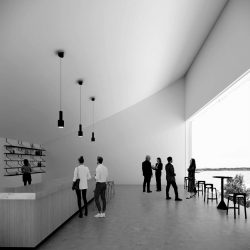
Spaces intended to enliven the street are placed behind the large windows to maximize natural light and invite passersby inside. The openings directed towards the exhibition spaces are carefully considered urban design elements, thoughtfully grounded in their architectural context and serving an educational purpose.
The concept prioritizes openness and accessibility: visitors can access all public functions—such as the lobby, library, shop, restaurant, and rooftop terrace—freely across all floors, without the need for an exhibition ticket. This encourages spontaneous visits and strengthens the building’s role as an inclusive public space. Additionally, the event areas and restaurant are accessible without intersecting with ongoing events, maintaining privacy and functionality for all users.
Outdoor spaces play a vital role in the overall architecture. The goal is to surround the museum with lush, organic greenery and plantings, creating a relaxing and natural public space for every citizen. In front of the museum, Vironallas provides a beautiful reflective water surface, enhancing the public space and adding a calming visual element to the museum’s entrance area.
_