Camps Felip Arquitecturia . photos: © José Hevia
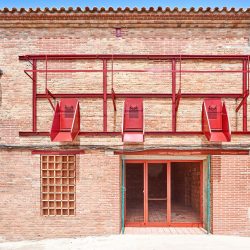
The new Cultural Center is located in a historic setting that is part of the Flix agricultural cooperative complex. The new space contributes to the recovery and enhancement of the building’s historical and social features and elements. The basic interventions to enable the new center’s use are: foundation and ground stability, structural consolidation, and comfort of the interior spaces.
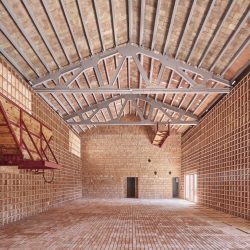
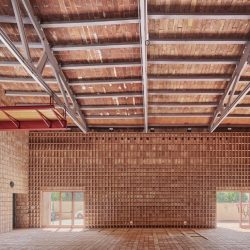
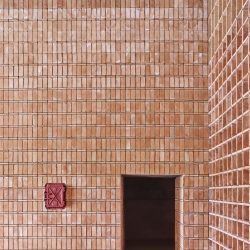
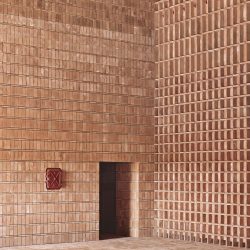
The original character of this heritage building is closely linked to its typology: a typology based on the void of the nave and the connection of the naves within the complex. Inside, the nave’s typological structure is preserved and designed to ensure maximum comfort. Just as the façade is configured with a single material, its interior is also made with a unique ceramic adobe material, which is repeated throughout the interior, reinforcing the unique character of the central nave’s void space. This repeated element adapts as a floor or self-supporting element. A ceramic finish and ceramic battens are proposed to improve the acoustic performance of the enclosure and unify and enhance the void space.
A double-skin system is proposed on the vertical walls, allowing the installations of the facility to be organized and hidden so as not to detract from the original, empty appearance of the nave. The renovation proposal aims to rehabilitate the warehouse’s envelope without altering its original industrial appearance, increasing the thermal insulation of the roof and façade. The most valuable construction and architectural elements that characterize the original building’s typology have been preserved, such as the wooden grape hopper, storage cisterns in the exterior dividing wall, the openings and walkway, the oil mill hopper, and the roof trusses.
The main entrance from Joan Maragall Street is preserved, and an access exclusively for maintenance in the technical room is proposed from Major Street. A third exit on the ground floor is located facing the exterior. The programmatic elements of the changing rooms are located beneath the restored cisterns, and the public facilities of the bar and restrooms are located outside the nave, inside the adjacent nave, beneath the current consulting rooms on the first floor. This program layout frees up the main hall, allowing it to host various events and uses in a high, open, rectangular space.
_










El nuevo Centro Cultural está ubicado en un entorno histórico que forma parte del complejo cooperativo agrícola de Flix. El nuevo espacio contribuye a la recuperación y puesta en valor de las características y elementos históricos y sociales del edificio.
Las intervenciones básicas para permitir el uso del nuevo centro son: cimentación y estabilidad del terreno, consolidación estructural y confort de los espacios interiores.
El carácter original de este edificio patrimonial está profundamente relacionado con su tipología: una tipología basada en el vacío de la nave y la conexión de las naves en el conjunto.
En el interior de la nave se conserva su estructura tipológica y está acondicionada para garantizar el máximo confort. Se propone un acabado cerámico y rastreles cerámicos para mejorar el comportamiento acústico del cerramiento y unificar el espacio vacío y potenciarlo. se propone un sistema de doble piel en los paramentos verticales que permite incorporar las instalaciones del recinto ordenadas y escondidas para que no desvirtúen el aspecto original y vacío de la nave.
La propuesta de rehabilitación pretende rehabilitar la envolvente de la nave sin modificar su aspecto industrial original, aumentando el aislamiento térmico de cubierta y fachada. Se conservan los elementos constructivos y arquitectónicos de mayor valor que caracterizan la tipología de la edificación original, tales como: la tolva de madera de uva, cisternas de almacenamiento de la medianera exterior, las aberturas y pasarela de tolva almazara y las cerchas de cubierta.
Así como la fachada está configurada con un único material cuyo interior también se hace con un material único de adobe manual cerámica, que se repite en todo el interior reforzando el carácter único del espacio vacío de la nave central. Esta pieza repetida se adapta siendo pavimento o elemento autoportante.
Se conserva el acceso principal desde la calle Joan Maragall y se propone un acceso exclusivamente para mantenimiento en la sala técnica desde la calle Major.
Se ubica una tercera salida a planta baja orientada hacia el espacio exterior.
Los elementos programáticos de vestuarios se ubican bajo las cisternas rehabilitadas y el conjunto de servicios públicos de bar y baños se ubican fuera del ámbito de la nave en el interior de la nave adyacente, bajo las actuales consultas de plata primera. Con esta distribución del programa se consigue liberar la sala principal de la nave, que podrá acoger distintos actos y usos en un espacio rectangular diáfano y de gran altura.